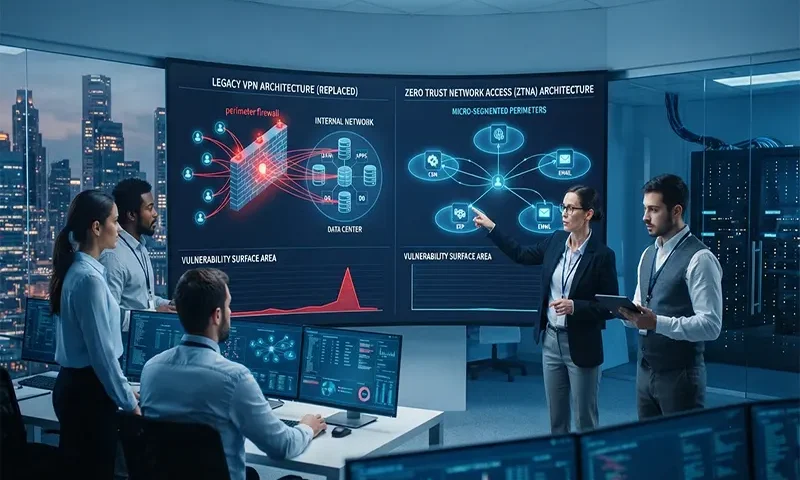
Why Enterprise Organizations Are Replacing Legacy VPNs with Zero Trust Network Access Architectures

Why Enterprise Organizations Are Replacing Legacy VPNs with Zero Trust Network Access Architectures

For decades, the Virtual Private Network (VPN) served as the undisputed cornerstone of enterprise remote access. Designed for an era when employees sat inside physical corporate offices and applications lived in on-premises data centers, legacy VPNs operated on a “castle-and-moat” security model: once a user authenticated at the perimeter, they were trusted implicitly.

In today’s hybrid work era, where corporate data lives across multi-cloud environments and users connect from everywhere, that implicit trust has become an enterprise security disaster. To protect against sophisticated ransomware, credential theft, and lateral threat movement, enterprise organizations are rapidly replacing legacy VPNs with Zero Trust Network Access (ZTNA) architectures.

The Fatal Flaws of Legacy VPNs in Modern Enterprises

Relying on legacy VPN concentrators in a perimeter-less world introduces severe security vulnerabilities and operational bottlenecks:

  • The Danger of Implicit Trust and Lateral Movement: Once a user connects via a traditional VPN, they are granted broad, network-wide
Read the rest >>>>
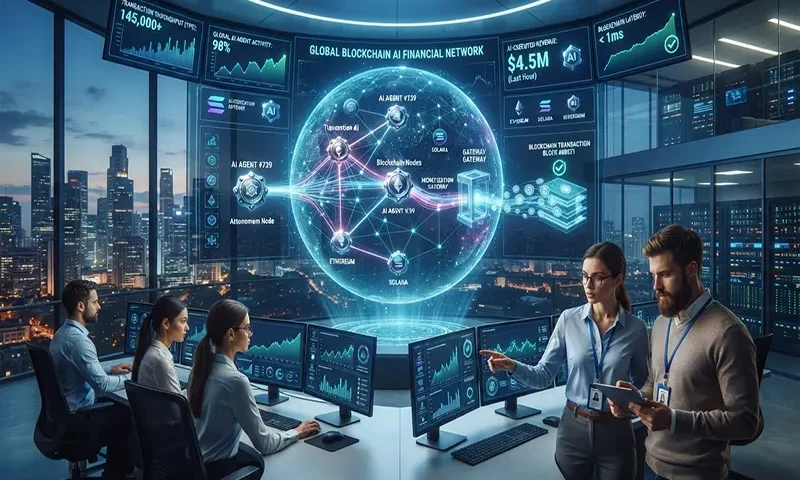
New Blockchain Monetization Gateways Allowing Autonomous AI Agents to Execute Financial Transactions

New Blockchain Monetization Gateways Allowing Autonomous AI Agents to Execute Financial Transactions

As artificial intelligence shifts rapidly from passive advisory tools to active autonomous operators, a profound economic bottleneck has emerged. Modern AI agents can write code, analyze data, negotiate contracts, and manage complex workflows in milliseconds, yet they remain fundamentally locked out of traditional financial systems. Traditional banking rails, credit card networks, and legacy merchant gateways are built entirely around human identity, manual authorization, and heavy KYC compliance.

To unlock true machine-to-machine commerce, the tech ecosystem is turning to blockchain monetization gateways. By combining high-speed layer-2 networks, account abstraction, and smart contracts, these crypto-native rails provide the programmatic infrastructure required for autonomous AI agents to hold funds, execute transactions, and monetize services at machine speed.

The Web2 Payment Bottleneck for Autonomous Agents

Legacy payment rails were never designed for software entities operating at automated scale.

  • The Human Identification Barrier: Traditional merchant accounts and payment gateways require physical human owners, corporate
Read the rest >>>>
How Enterprise Organizations Are Orchestrating Multi-Agent AI Systems to Automate Complex Business Workflows

How Enterprise Organizations Are Orchestrating Multi-Agent AI Systems to Automate Complex Business Workflows

The early waves of enterprise generative AI adoption were defined by isolated chat interfaces and single-prompt interactions. While these tools boosted individual productivity, they hit a hard operational ceiling when applied to complex, multi-step business processes that require cross-departmental coordination, continuous validation, and tool execution.

To break through this limitation, enterprise organizations are shifting away from monolithic LLMs and adopting multi-agent AI systems. By orchestrating specialized, collaborative networks of autonomous agents, businesses are transforming automated workflows from rigid scripts into dynamic digital workforces.

The Limitations of Single-Agent and Monolithic AI Models

Throwing a single, monolithic large language model at an end-to-end enterprise workflow—such as supply chain disruption re-routing or complex financial auditing—inevitably leads to failure for several reasons:

  • Cognitive Overload and Hallucination Drift: When forced to handle planning, data extraction, analysis, calculation, and formatting simultaneously within a single prompt context, models suffer from attention degradation and mounting error rates.
Read the rest >>>>
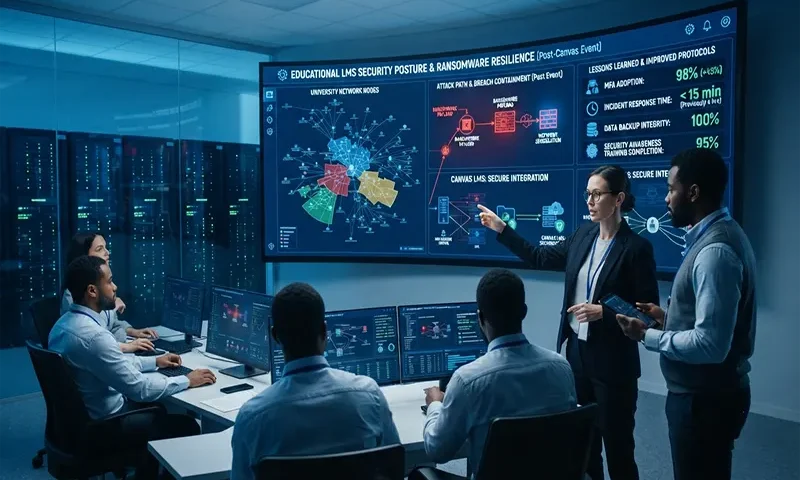
Lessons Learned from the Canvas Learning Management System Ransomware Attack and Data Breach

Lessons Learned from the Canvas Learning Management System Ransomware Attack and Data Breach

The massive cyberattack and data breach targeting the Canvas Learning Management System (LMS) serves as a watershed moment for institutional IT governance and educational cybersecurity. As centralized learning platforms aggregate massive volumes of sensitive academic records, communication history, and personal disclosures, they have become prime high-value targets for sophisticated extortion groups.

The incident—marked by unauthorized data exfiltration, service defacements during final examination periods, and complex vendor negotiations—offers critical lessons for educational institutions, Chief Information Security Officers (CISOs), and technology vendors alike.

The Anatomy of Educational LMS Vulnerabilities

Educational ecosystems present unique structural challenges that threat actors actively exploit:

  • Sprawling Digital Perimeter: Modern LMS platforms do not operate in a vacuum. They are deeply interconnected with third-party Learning Tools Interoperability (LTI) plugins, cloud storage tiers, and external administrative directories.
  • The Risk of Secondary Entry Points: Attackers frequently bypass heavily secured core production clusters by probing peripheral, lower-security environments—such as legacy testing
Read the rest >>>>
Enterprise Identity Threat Detection Tools to Prevent AI Deepfake Impersonation and Credential Abuse

Enterprise Identity Threat Detection Tools to Prevent AI Deepfake Impersonation and Credential Abuse

The modern cybersecurity perimeter is no longer defined by corporate firewalls or endpoint devices—it is anchored entirely in digital identity. Yet, the proliferation of generative artificial intelligence has weaponized identity attacks. Threat actors have moved far beyond basic credential stuffing and phishing, now utilizing real-time audio and video deepfake impersonation to mimic executives, finance leaders, and IT administrators during high-stakes authorization requests.

Traditional Multi-Factor Authentication (MFA) and legacy Identity and Access Management (IAM) systems were built to verify static factors like passwords, SMS codes, or hardware tokens. They were never designed to verify whether the human being on a video conference or phone call is authentic. To combat this shift, organizations are turning to advanced Identity Threat Detection and Response (ITDR) tools equipped to intercept AI-driven impersonation and sophisticated credential abuse.

The Evolving Threat Landscape: Beyond Password Spraying to Real-Time Deepfakes

For years, credential abuse was largely automated via botnets … Read the rest >>>>