Implementing Enterprise FinOps Frameworks to Reduce Multi-Cloud Waste and Variable Billing Surprises

Implementing Enterprise FinOps Frameworks to Reduce Multi-Cloud Waste and Variable Billing Surprises

For many enterprise organizations, multi-cloud adoption was born out of a desire for agility, vendor diversification, and redundancy. However, without centralized governance, decentralized provisioning across AWS, Azure, and Google Cloud frequently leads to a silent financial drain: unbudgeted multi-cloud sprawl, widespread resource waste, and the monthly dread of variable billing surprises.

Traditional IT accounting methods are entirely unequipped to handle real-time, variable cloud consumption models. To regain control, modern enterprises are implementing structured Cloud Financial Management (FinOps) frameworks. FinOps bridges the historic communication gap between engineering speed and financial accountability, transforming cloud infrastructure from an unpredictable expense into a disciplined, optimized business engine.

The Multi-Cloud Waste Trap and Variable Billing Surprises

When development teams across multiple business units spin up cloud resources without centralized cost visibility, waste accumulates rapidly:

  • Shadow IT and Orphaned Assets: Forgotten snapshots, unattached persistent disks, idle development clusters, and over-provisioned compute instances quietly run 24/7 across

Read the rest >>>>
Hybrid Cloud Architectures to Minimize Data Egress Costs and Manage Steady-State Workloads

Hybrid Cloud Architectures to Minimize Data Egress Costs and Manage Steady-State Workloads

For many enterprise Chief Technology Officers, opening the monthly public cloud invoice brings a familiar kind of sticker shock. While public cloud providers offer unmatched elasticity for variable workloads, relying on them to host high-volume, predictable, steady-state operations introduces a silent financial drain: data egress fees.

Hyperscalers charge heavily to move data out of their ecosystems, across availability zones, or across geographic regions. For enterprises processing massive datasets, analytics pipelines, or media archives, these bandwidth tolls routinely erode profit margins. To regain control of runaway cloud expenditure, organizations are implementing strategic hybrid cloud architectures designed specifically to eliminate unnecessary egress charges and optimize steady-state workloads.

The Hidden Financial Trap of Public Cloud Data Egress

Public cloud adoption is governed by an asymmetrical pricing model: getting data into the cloud is typically free or inexpensive, but getting data out is aggressively monetized.

  • The One-Way Tollbooth: Every time data is transferred
Read the rest >>>>
Adopting Application Containerization to Optimize High-Density Infrastructure for Generative AI Workloads

Adopting Application Containerization to Optimize High-Density Infrastructure for Generative AI Workloads

Deploying generative AI models—such as large language models (LLMs), multimodal engines, and diffusion pipelines—at enterprise scale presents unprecedented infrastructure challenges. Chief among them is the staggering cost and scarcity of specialized hardware. Running resource-intensive AI models on monolithic bare-metal servers or legacy virtual machines frequently leads to severe resource fragmentation, idle compute waste, and inefficient GPU utilization.

To maximize compute density and control skyrocketing cloud expenditure, enterprise platform teams must move away from traditional deployments and adopt application containerization tailored for high-density generative AI workloads.

The Infrastructure Bottlenecks of Uncontainerized GenAI Workloads

Managing generative AI applications without containerization introduces profound architectural friction that hampers both scaling and cost-efficiency.

  • Dependency Hell and Environment Drift: Modern AI stacks rely on fragile, tightly coupled dependencies—specific Python versions, exact CUDA toolkit builds, specialized tensor libraries, and optimized driver versions. Managing these natively across multiple servers leads to constant version conflicts and environment drift.
  • GPU
Read the rest >>>>
Corporate Migration to Sovereign Cloud Infrastructure to Meet Regional Data Sovereignty Regulations

Corporate Migration to Sovereign Cloud Infrastructure to Meet Regional Data Sovereignty Regulations

The global regulatory landscape for digital data has transformed from a patchwork of minor administrative guidelines into a complex matrix of stringent, extraterritorial legal frameworks. For multinational corporations and heavily regulated industries, relying solely on traditional hyperscale public cloud providers no longer guarantees immunity from cross-border legal reach or data exposure mandates. Laws such as the European Union’s GDPR, local data residency acts across Asia-Pacific, and expanding localization requirements globally mean that where data sits—and who can legally access it—is a board-level risk.

To maintain global agility while strictly adhering to local legal mandates, enterprises are executing a strategic shift toward sovereign cloud infrastructure. This transition moves past basic data storage compliance, establishing digital autonomy that protects sensitive enterprise workloads from foreign jurisdiction overreach.

The Regulatory Pressures Driving Corporate Migration

The imperative for sovereign cloud solutions stems from the friction between borderless cloud architectures and heavily bordered legal jurisdictions.… Read the rest >>>>

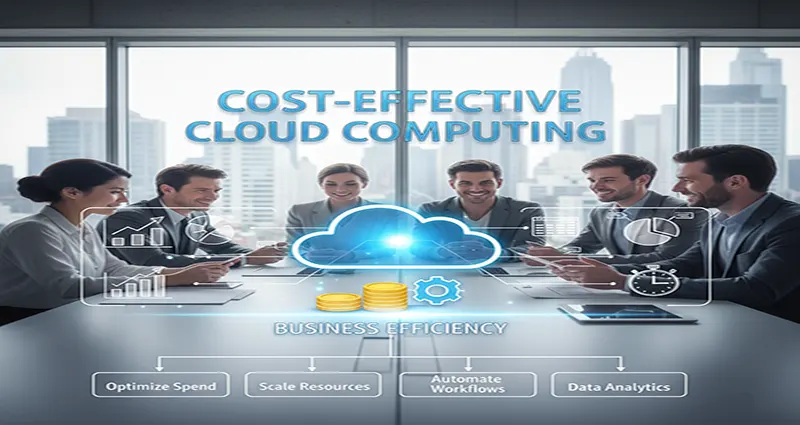
Cost-Effective Cloud Computing Strategies for Business Efficiency

Cost-Effective Cloud Computing Strategies for Business Efficiency

In the age of digital transformation, cloud computing is no longer a luxury but a strategic necessity for businesses of all sizes, promising scalability, flexibility, and reduced capital expenditure (CapEx). However, without careful management, the pay-as-you-go model can quickly lead to spiraling costs, undermining the intended business efficiency. Achieving a true Return on Investment (ROI) from the cloud requires a proactive, strategic approach to cost optimization.

Here are essential, cost-effective cloud computing strategies to ensure your business maximizes efficiency and minimizes unnecessary expenditure.

1. Adopt a FinOps Culture and Gain Visibility

You can’t optimize what you can’t measure. The foundation of cost-effective cloud use is a clear, comprehensive understanding of where every dollar is being spent.

  • Implement Cloud Cost Management Tools: Utilize native tools (like AWS Cost Explorer, Azure Cost Management, or Google Cloud Billing Reports) or third-party platforms to gain real-time visibility into your spending.
  • Establish Consistent Tagging: Enforce
Read the rest >>>>