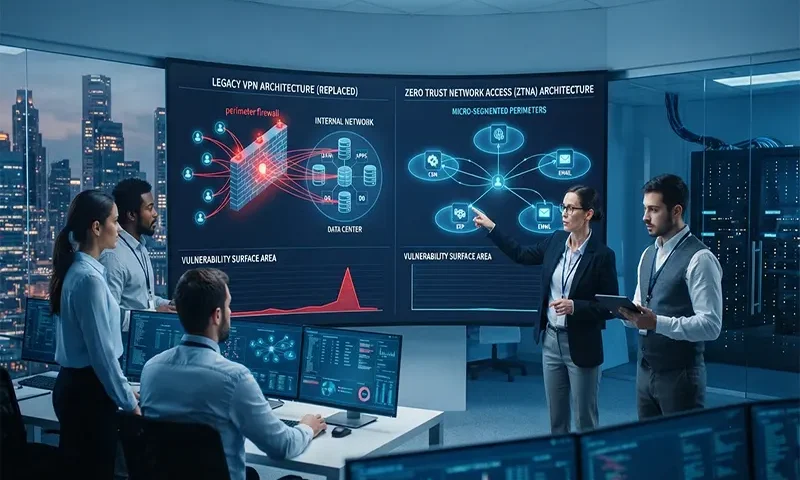
Why Enterprise Organizations Are Replacing Legacy VPNs with Zero Trust Network Access Architectures

Why Enterprise Organizations Are Replacing Legacy VPNs with Zero Trust Network Access Architectures

For decades, the Virtual Private Network (VPN) served as the undisputed cornerstone of enterprise remote access. Designed for an era when employees sat inside physical corporate offices and applications lived in on-premises data centers, legacy VPNs operated on a “castle-and-moat” security model: once a user authenticated at the perimeter, they were trusted implicitly.

In today’s hybrid work era, where corporate data lives across multi-cloud environments and users connect from everywhere, that implicit trust has become an enterprise security disaster. To protect against sophisticated ransomware, credential theft, and lateral threat movement, enterprise organizations are rapidly replacing legacy VPNs with Zero Trust Network Access (ZTNA) architectures.

The Fatal Flaws of Legacy VPNs in Modern Enterprises

Relying on legacy VPN concentrators in a perimeter-less world introduces severe security vulnerabilities and operational bottlenecks:

  • The Danger of Implicit Trust and Lateral Movement: Once a user connects via a traditional VPN, they are granted broad, network-wide
Read the rest >>>>
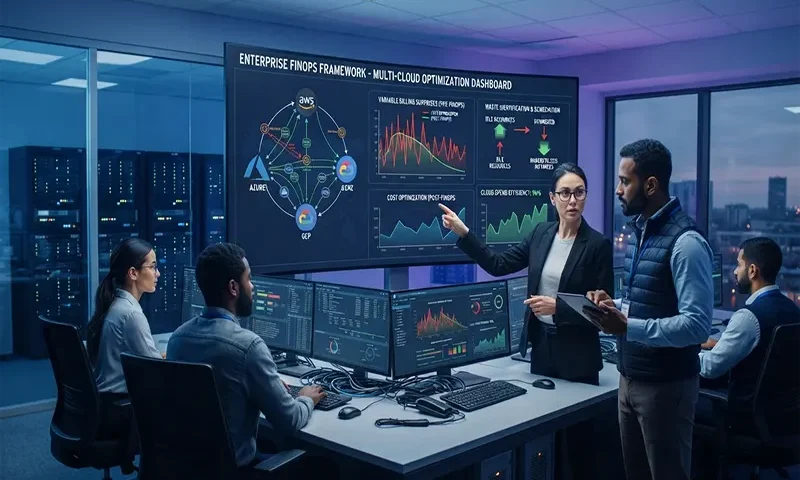
Implementing Enterprise FinOps Frameworks to Reduce Multi-Cloud Waste and Variable Billing Surprises

Implementing Enterprise FinOps Frameworks to Reduce Multi-Cloud Waste and Variable Billing Surprises

For many enterprise organizations, multi-cloud adoption was born out of a desire for agility, vendor diversification, and redundancy. However, without centralized governance, decentralized provisioning across AWS, Azure, and Google Cloud frequently leads to a silent financial drain: unbudgeted multi-cloud sprawl, widespread resource waste, and the monthly dread of variable billing surprises.

Traditional IT accounting methods are entirely unequipped to handle real-time, variable cloud consumption models. To regain control, modern enterprises are implementing structured Cloud Financial Management (FinOps) frameworks. FinOps bridges the historic communication gap between engineering speed and financial accountability, transforming cloud infrastructure from an unpredictable expense into a disciplined, optimized business engine.

The Multi-Cloud Waste Trap and Variable Billing Surprises

When development teams across multiple business units spin up cloud resources without centralized cost visibility, waste accumulates rapidly:

  • Shadow IT and Orphaned Assets: Forgotten snapshots, unattached persistent disks, idle development clusters, and over-provisioned compute instances quietly run 24/7 across
Read the rest >>>>