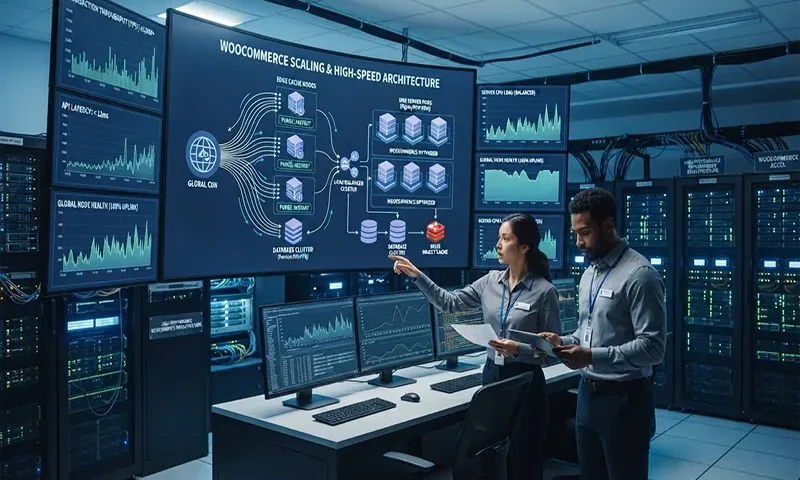
Specialized High-Speed Managed WordPress Hosting Architectures for Scaling WooCommerce Stores

Specialized High-Speed Managed WordPress Hosting Architectures for Scaling WooCommerce Stores

For growing e-commerce brands, nothing kills top-line revenue faster than a sluggish checkout experience during a peak traffic surge or flash sale. Even a one-second delay in page load time can cause a sharp drop in conversion rates and send frustrated shoppers straight to competitors.

While standard WordPress hosting is adequate for low-traffic blogs and brochure sites, WooCommerce stores have vastly different computational demands. Scaling a high-volume online store requires moving away from generic shared environments and adopting a specialized, high-speed managed WordPress hosting architecture engineered specifically for e-commerce workloads.

The Anatomy of WooCommerce Scale Failures

WooCommerce is an exceptionally powerful and flexible e-commerce engine, but it is also computationally heavy. Unlike static websites, e-commerce platforms rely heavily on dynamic, non-cacheable interactions.

  • The Database Bloat Trap (wp_postmeta): Every product attribute, customer order, session state, and transient record writes directly to the database. Without proper indexing and optimization, the

Read the rest >>>>
How Autonomous Agentic AI Vulnerability Scanners Are Changing Enterprise Zero-Day Patch Timelines

How Autonomous Agentic AI Vulnerability Scanners Are Changing Enterprise Zero-Day Patch Timelines

The traditional cybersecurity cadence of monthly patch cycles and quarterly penetration testing is fundamentally broken. Threat actors and researchers are no longer operating at human speed; instead, they are deploying autonomous, goal-directed AI systems that discover, validate, and weaponize vulnerabilities at machine speed.

As a result, the enterprise vulnerability landscape has compressed dramatically. The traditional window between vulnerability disclosure and exploit availability has shrunk from weeks to hours, transforming zero-day vulnerability management from a routine administrative chore into an existential, high-stakes race against autonomous algorithms.

The Paradigm Shift: From Human-Paced Discovery to Machine-Speed AI Scanners

For decades, vulnerability assessment relied heavily on static signatures, rule-based web scanners, and periodic manual code reviews or penetration tests. These legacy tools suffer from high false-positive rates and lack the contextual reasoning required to understand complex, multi-layered enterprise application logic.

The emergence of autonomous agentic AI vulnerability scanners changes this equation entirely. Unlike static … Read the rest >>>>